
At the heart of the Peruvian Amazon, we are proud to share exciting updates from the field as the 8 Primate Project, based at Tambopata Research Center, continues to reshape the way we monitor and protect wildlife. This initiative, a core component of Wired Amazon, combines cutting-edge science, community collaboration, and eco-tourism to promote the conservation of primates and biodiversity throughout the Tambopata region.
After months of tireless fieldwork in the Amazon, the team has successfully compiled a robust bioacoustic library for 7 out of the 8 targeted primate species. These sound recordings, collected in the lush rainforests of Tambopata, reveal the unique acoustic signatures and communication patterns of key species, including the black spider monkey, the brown capuchin, and the red howler monkey.
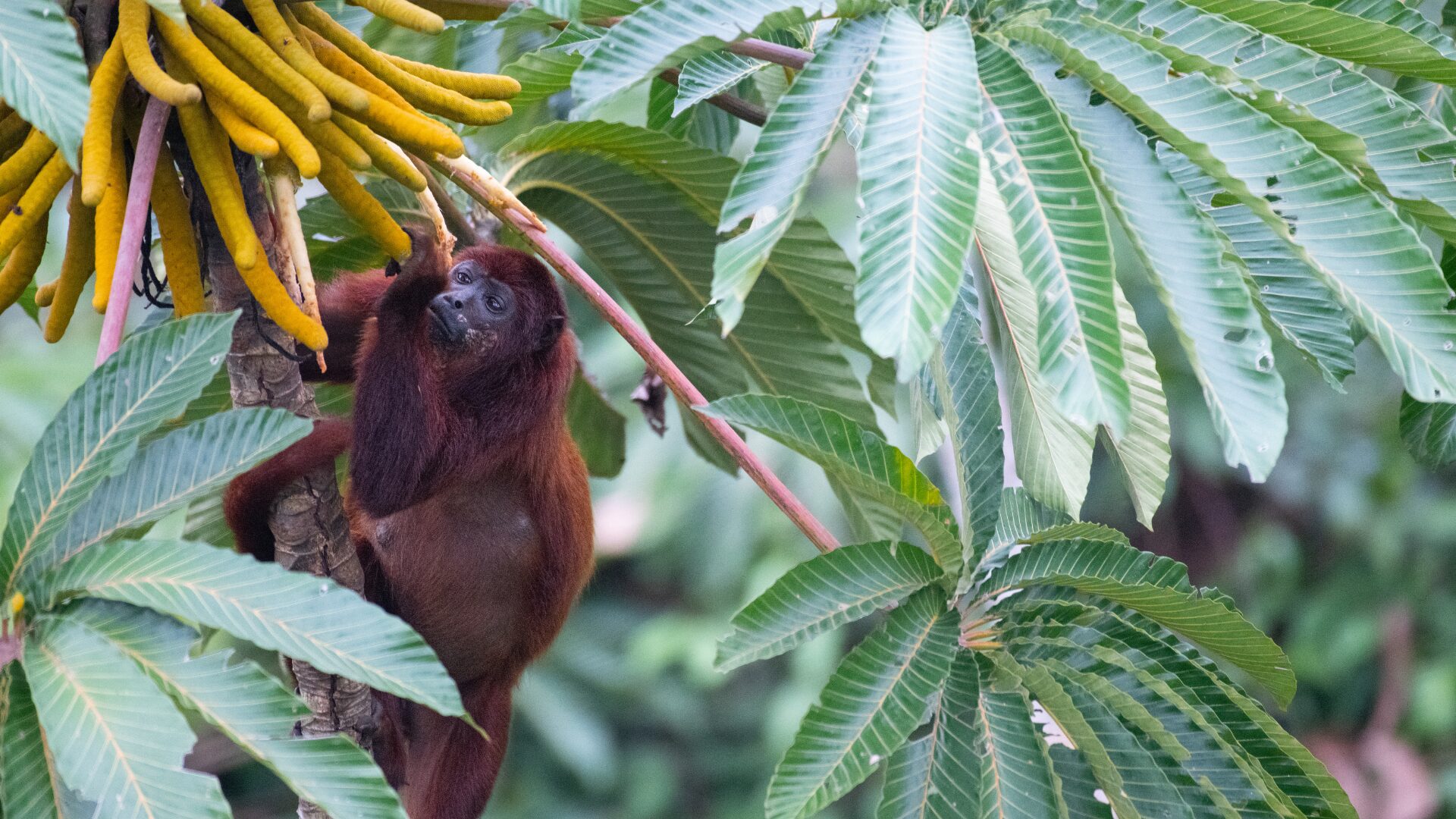
Red howler monkey (Alouatta seniculus) eating a fruit from a tree. Photo by Hugo Cliff
These vocalizations are not just fascinating—they’re essential for understanding primate behavior, mapping species distribution, and detecting long-term ecological changes. This library will serve as a powerful tool for conservation scientists, enabling more effective protection of these ecologically vital species.
To supercharge data analysis, the project now utilizes automated detection algorithms that can identify specific monkey calls across a growing network of audio recorders. This breakthrough allows real-time tracking of primates in Tambopata's dense forests, dramatically increasing the efficiency of monitoring efforts at Tambopata Research Center and beyond.

8 Primates sonograms in the Open Lab. Photo by Nell Jones
A key feature of Wired Amazon is the perfect blend of ecotourism and science for conservation, with active involvement of tourists as citizen scientists. In the latest phase of the project, visitors have helped expand the acoustic dataset to include not only primates but also birds, frogs, and even human-made sounds. These collaborations enrich the scientific value of the data and build lasting emotional connections between travelers and the fragile ecosystems of the Amazon.
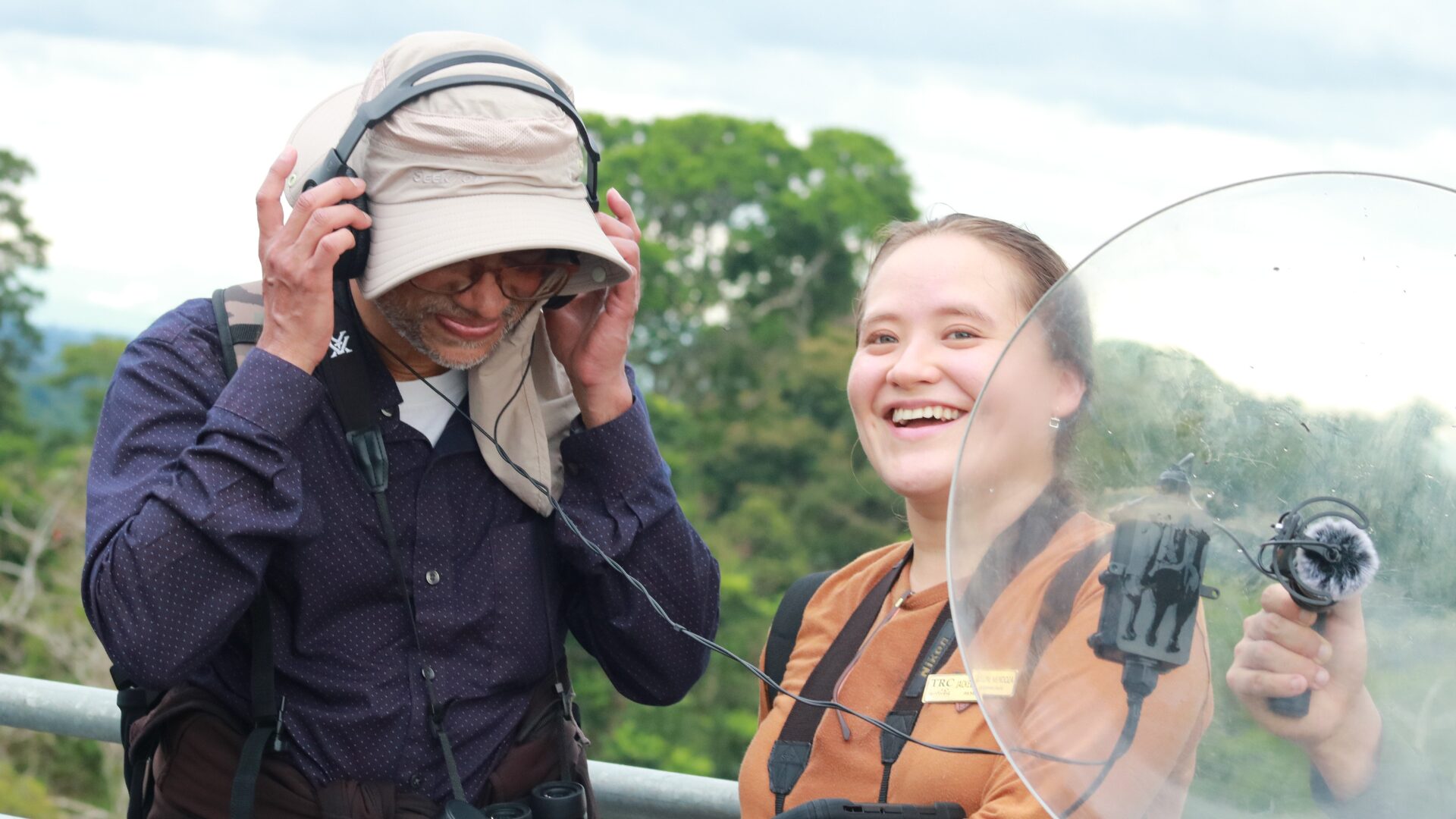
Jackeline Mendoza, 8 Primates field researcher, with a passenger doing citizen science activities.
Community collaboration is a cooperative process where scientists, conservationists, and local populations work together to address environmental challenges, combining traditional knowledge with scientific research. It goes beyond participation—it fosters shared decision-making and mutual responsibility for outcomes. According to the International Union for Conservation of Nature (IUCN), involving communities in conservation leads to more effective and lasting results, as local people often serve as stewards of the landscapes they inhabit. This principle underpins our strategy in Tambopata, where partnerships with Brazil nut collectors, guides, and forest users enhance the resilience and reach of our monitoring efforts.
The 8 Primate Project is now scaling up to monitor biodiversity across a broader landscape. While early efforts focused on Tambopata National Reserve, new static recording devices are being installed in:
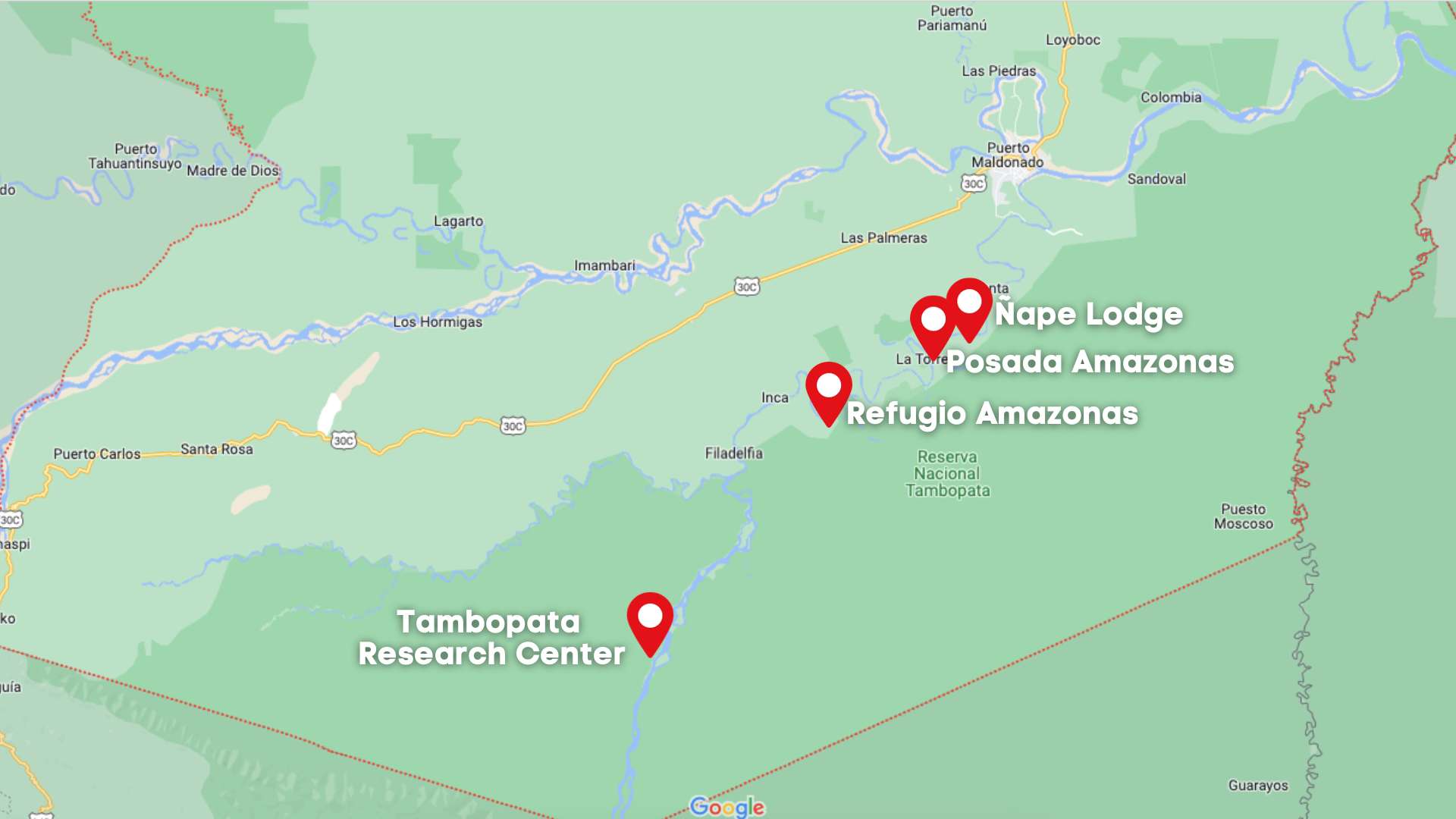
This expansion supports a bold, landscape-level conservation strategy across the Amazon. As we can see in the map, this was initially implemented in Rainforest Expeditions lodges as part of Wired Amazon, creating scientific research hubs in the region to later cover the Tambopata forest on a larger scale, addressing five major goals:
1.Building Partnerships for Local Conservation: We are working closely with local communities, landowners, and ecotourism operators to maintain equipment and interpret data. These community collaborations empower local stakeholders and align conservation goals with community livelihoods.
2.Establishing Long-Term Monitoring Baselines: In many of these newly reached areas, historical biodiversity data is limited or nonexistent. By creating long-term acoustic baselines, the project will track ecological changes, species declines, or recoveries year after year — a vital step for adaptive conservation.
3.Understanding Biodiversity Across Land Uses: From primary rainforests and Brazil nut concessions to regenerating areas and agroforestry plots, the study aims to understand how species richness and vocal activity vary with land management practices. This insight enables the development of targeted strategies that integrate science with real-world conservation efforts.
4.Mapping Primate Movement and Habitat Use Different primate species use diverse habitats. Wide-ranging monkeys like the black spider monkey may traverse multiple land types. Through sound, we’re identifying their movement corridors, potential habitat barriers, and critical transition zones for conservation focus.
5.Detecting Human Threats to Wildlife: Buffer zones often experience the highest levels of human pressure. With our acoustic network, we can now detect chainsaws, gunshots, and other anthropogenic sounds, providing data to compare biodiversity trends with levels of human activity.
With each step, the 8 Primate Project is evolving into one of the most comprehensive science-based conservation programs in Tambopata. Powered by Rainforest Expeditions, rooted in the pristine wilderness of Tambopata Research Center, and amplified by citizen scientists from around the world, this initiative embodies a new era of ecosystem monitoring — one that spans national protected areas in Madre de Dios, buffer zones, and human-managed lands.
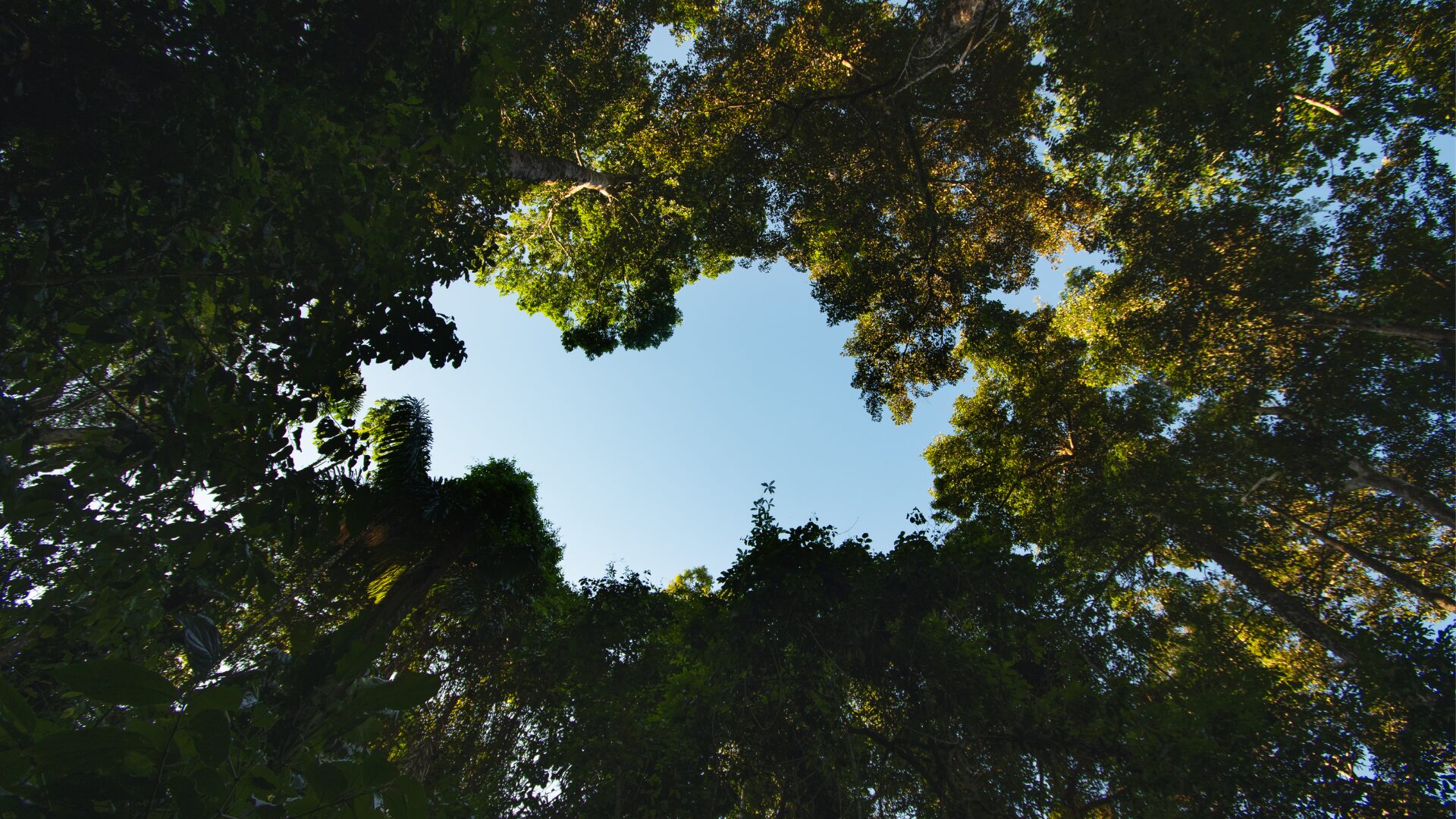
Canopy from the ground, photo by Gabriel Serrano
By blending technology, community collaboration, and the wild beauty of the Amazonía, we’re not just listening to the forest — we’re learning how to protect it. Exploring Tambopata soon? Join us in the field.
