
Discovering new species in the Peruvian Amazon
When night falls in the Peruvian Amazon and the forest seems to sink into silence, a light flickers between the trees. It’s the light trap from the Discovering new species project, part of the Wired Amazon program, where science and tourism meet to create a truly transformative experience.
Developed in the lush forests of Tambopata by Rainforest Expeditions and the Natural History Museum of the National University of San Marcos, this project invites guests to become active participants in scientific discovery, directly contributing to the understanding and conservation of biodiversity.
What is the Discovering New Species project?
Discovering New Species is a pioneering research and citizen science initiative aimed at documenting and uncovering insects — primarily moths and beetles — that are little-known or completely new to science. Led by expert entomologist Juan Grados Arauco, guests join guided night walks to the light trap, where, after receiving instructions from the biologists, they begin collecting samples that are later studied and identified.
Every guest becomes an active participant in conservation. This hands-on experience is designed to educate, inspire, and generate valuable data for science.
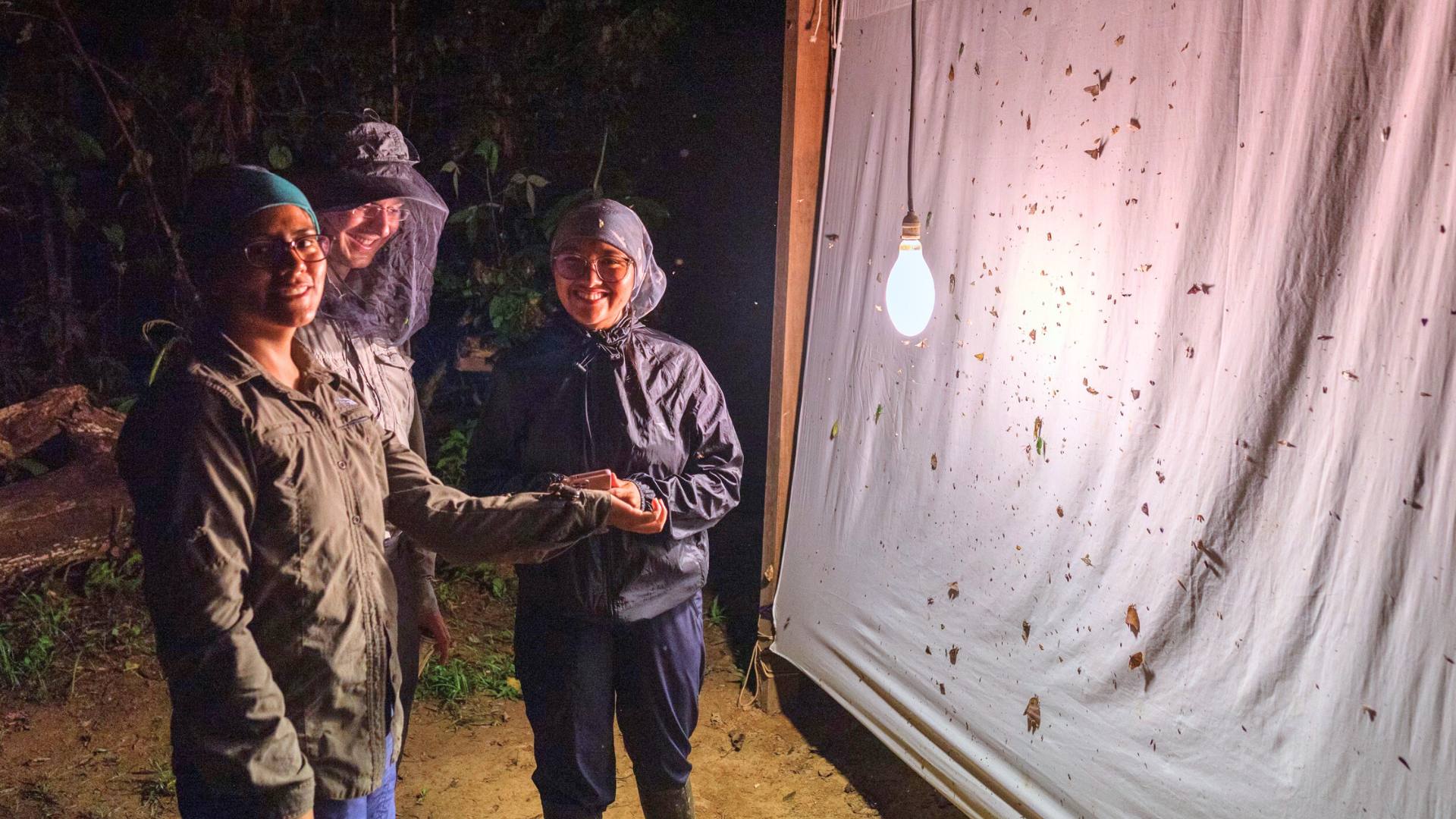
Rainforest expeditions guests with the resident biologist Aracely Meza
Citizen science: a key tool for conservation
Since 2019, Discovering New Species has led to the identification of dozens of species previously unknown to science. The collected specimens are not only studied morphologically, but also undergo DNA barcoding techniques in collaboration with the University of Guelph in Canada, allowing for more accurate identifications.
And the most extraordinary part? Many of these newly discovered species have been named after the very guests who helped collect them, leaving behind both a scientific and personal legacy.
Each year, the project expands its scope by incorporating more insect groups such as microlepidoptera, pyralids, and saturniids, while using new methodologies you can learn more about in the video below:
Why is it important to discover new species?
Because conservation isn’t just about protection — it’s also about understanding. And understanding starts with taking a closer look. In a rapidly changing world, where habitats are shrinking and species vanish before they’re even described, initiatives like this make a real difference — adding new species to the region’s records and increasing the overall value of its biodiversity.
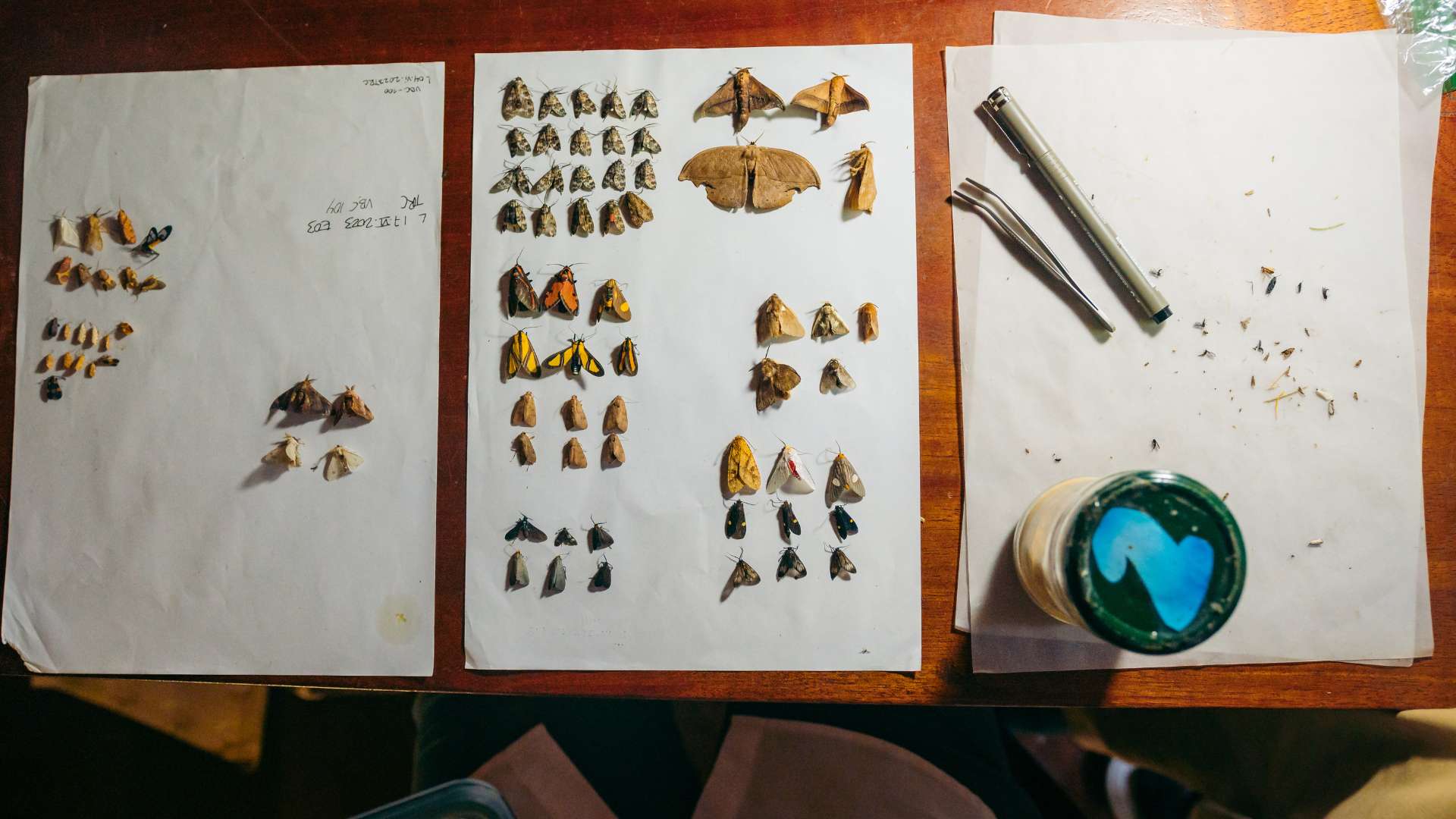
Sample processing in the Open lab. Photo by Carlos Gonzalez
Studying such a vast and mysterious group as insects in one of the most biodiverse places on Earth is crucial for their conservation.
Ready to be part of a discovery?
If you visit Rainforest Expeditions' lodges, this experience awaits you. You don’t need to be a scientist — just bring your curiosity and a desire to leave a mark on the world’s knowledge. Because in the Amazon, every night holds the potential for a new species to be born, and you could witness it.
