In the 8 Primates Project, we listen to the Amazon in a very particular way through the voices of its monkeys. Using remote microphones and bioacoustics technology, we can detect and study their calls without disturbing them. After more than a year of recordings in the Tambopata forest, we’ve learned incredible things about each species, from their social interactions to their feeding habits.
Among the most fascinating to observe are the capuchins. Considered the most intelligent animals in the Tambopata National Reserve, they constantly surprise us with their behavior. Thanks to our citizen science program, volunteers like Rachel and Breton have joined researcher Tadashi Cáceres to track and record the two capuchin species that inhabit the area around the Tambopata Research Center (TRC).
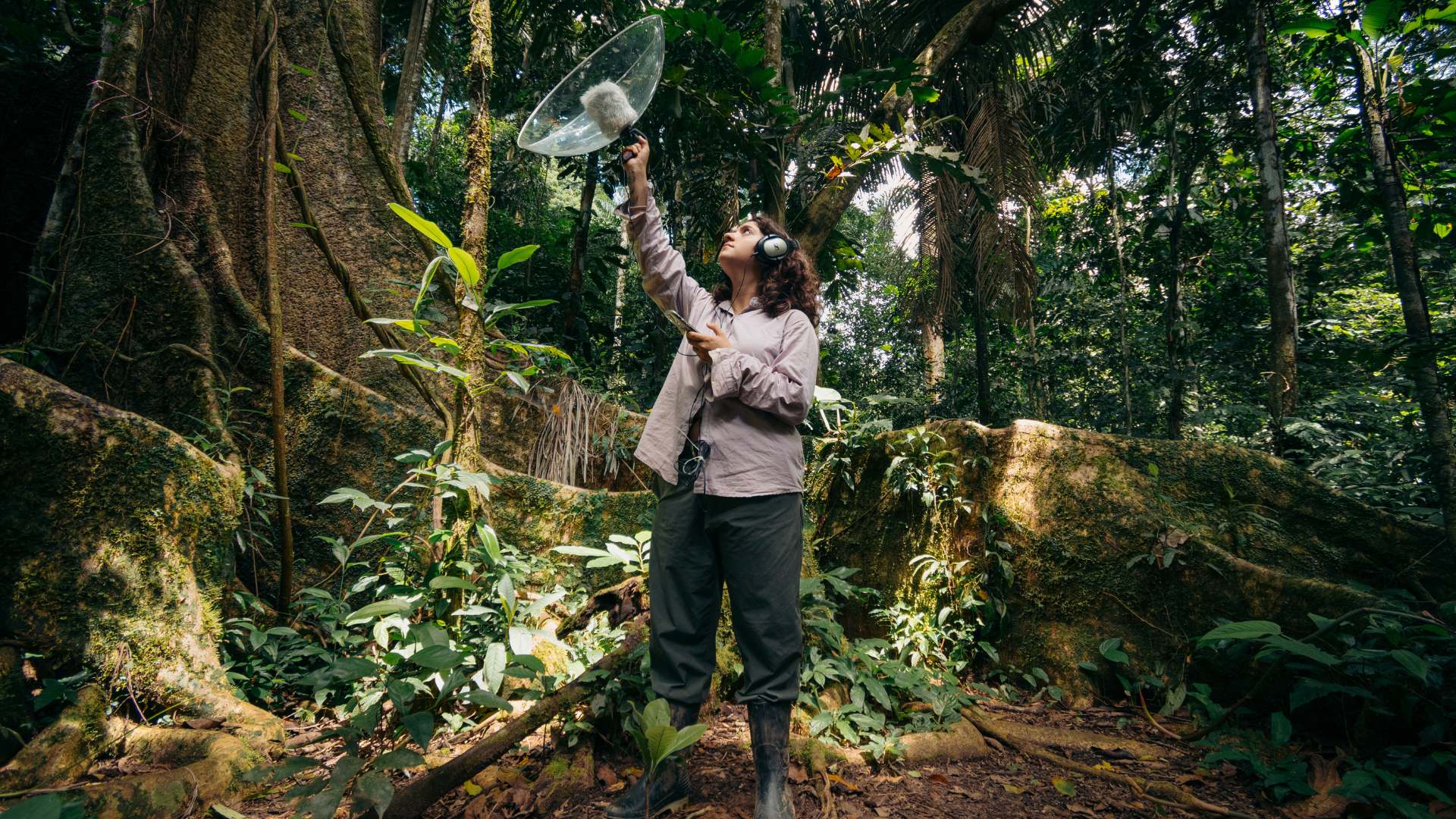
Volunteer - 8 primates by Gabriel Serrano
During one hike, Rachel and Breton spotted a troop of about 15–20 capuchins foraging in the dense bamboo. The monkeys snapped branches as they searched for food, anything from chicks and eggs to insects. In the process, they startled two spectacled owls that flew overhead. One capuchin paused to chew on something, perhaps fruit. But later, when a pale, translucent frog’s leg was found nearby, it became clear that the monkey had been eating the frog, much like a “drumstick.” Despite its injuries, the frog was still alive, a stark reminder of the harsh and resilient nature of life in the rainforest.
While macaws, capybaras, and howler monkeys are often seen in the Amazon, spotting a white capuchin is a rare privilege. Their populations have been reduced by hunting, and some family groups have as few as 15 individuals. Last week, while recording vocalizations with a tourist, we first came across only black howler monkeys. But news soon reached us of white capuchins nearby, and we set out to find them.
Half a kilometer off the trail, we located them feeding high in a tree. At first, they moved away, but soon they grew accustomed to our presence. For half an hour, we watched them play, feed, and call to one another. Their vocalizations, similar to the black howler’s but more cautious, were carefully recorded. Observations like this are key for their conservation, helping us understand and protect one of Tambopata’s most elusive species.
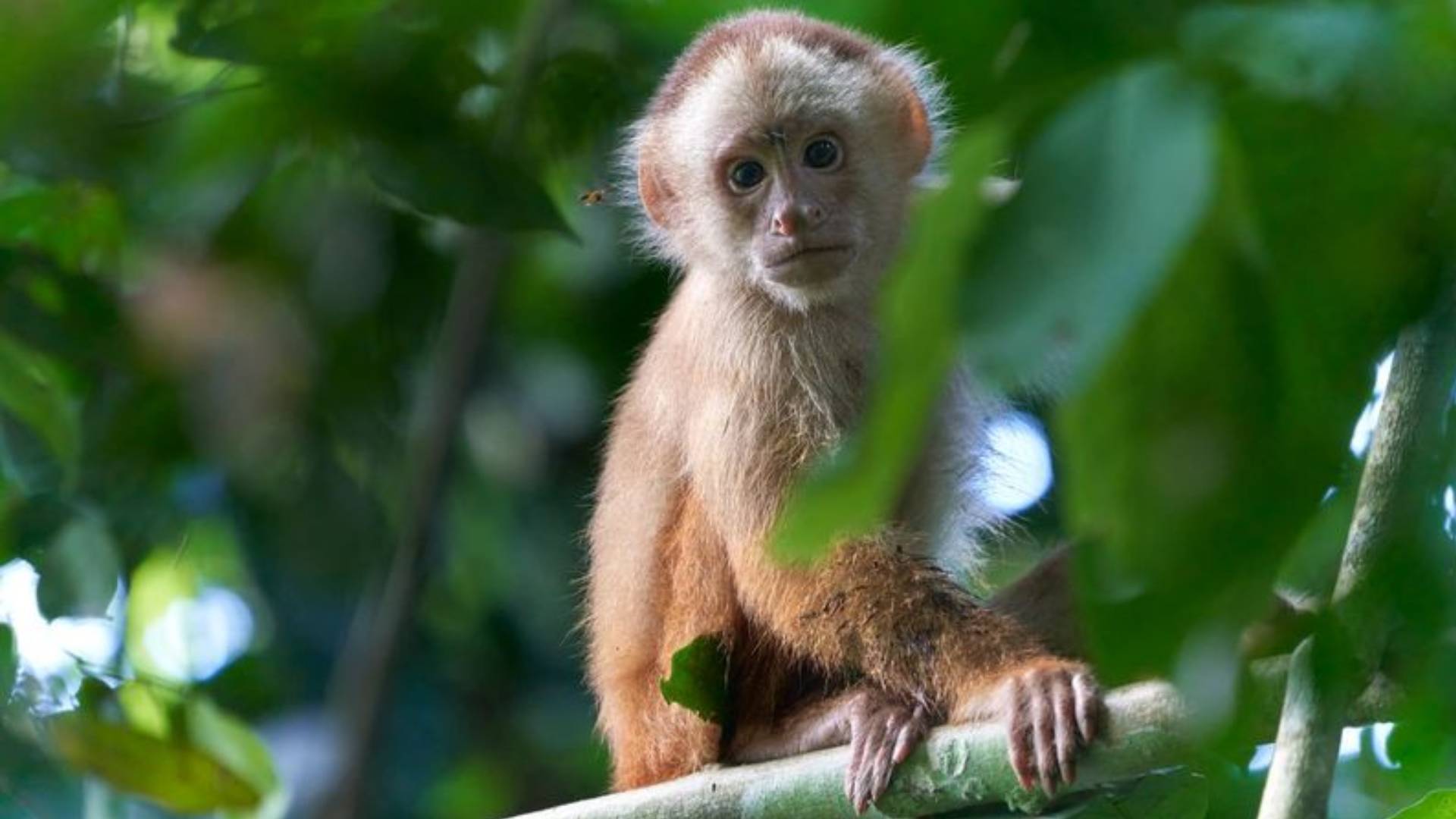
White capuchin monkey in a branch. Photo by Paul Bertner
The Black capuchin is just as remarkable. Known for its problem-solving skills, it often uses tools sticks, leaves, or branches to access food. Their calls are varied and purposeful: some warn of predators, others alert the group to a good food source. Studying these vocalizations through bioacoustics enables us to track their movements across large areas of the Tambopata forest without disturbing them, providing valuable insights into their complex social lives and informing strategies to safeguard them in the wild.

Pair of brown capuchin monkeys. Photo by Jonah Darius
The project began with a simple but urgent goal: to understand how primates communicate and how those sounds can guide conservation. By building an acoustic library, we can monitor species across wide areas, detect population changes, and even identify threats like hunting or habitat loss. It’s a way to combine field science, technology, and citizen science so these animals can continue to thrive in the forests of Tambopata. You can learn more about our project in this video:
At Tambopata Research Center, every recording, every sighting, and every shared story becomes part of something bigger, a commitment to the conservation of one of the most biodiverse places on Earth. Visitors and volunteers aren’t just observers; they become active participants in ensuring that the voices of Tambopata’s primates will continue to echo through the rainforest for generations to come.