
When people imagine the Amazon rainforest, they often think of colorful macaws, troops of monkeys moving through the canopy, or elusive jaguars roaming the forest floor. Yet beneath every leaf, along every trail, and around every tree exists another world that is just as remarkable: the world of insects.
Although often overlooked, insects are among the most important organisms on Earth. They pollinate plants, recycle nutrients, decompose organic matter, regulate pest populations, and support countless food webs. Entire ecosystems depend on their presence.
Despite their ecological importance, insect populations are declining worldwide at an alarming rate. Scientists have described this phenomenon as “death by a thousand cuts,” a gradual process driven by the accumulation of human pressures, including habitat loss, pesticide use, pollution, climate change, urbanization, and invasive species.
Wagner, D. L., Grames, E. M., Forister, M. L., Berenbaum, M. R., & Stopak, D. (2021). Insect decline in the Anthropocene: Death by a thousand cuts. Proceedings of the National Academy of Sciences, 118(2)
As insect populations decline, another phenomenon is occurring simultaneously: people are becoming increasingly disconnected from nature.
By 2050, an additional 2.5 billion people are expected to live in urban environments. While cities provide opportunities for economic and social development, they often limit daily interactions with biodiversity. Naturalist Robert Pyle referred to this process as the “extinction of experience,” the gradual loss of meaningful contact with the natural world.
Soga, M., & Gaston, K. J. (2016). Extinction of experience: The loss of human–nature interactions. Frontiers in Ecology and the Environment, 14(2), 94–101.
Without regular exposure to nature, familiarity decreases. This disconnection can shape how people perceive wildlife, particularly less charismatic organisms such as insects. Unlike birds or mammals, insects are frequently associated with fear, disgust, or danger.
These perceptions influence more than personal preferences. Public attitudes affect conservation priorities, educational initiatives, and support for biodiversity protection. Although insects represent the majority of known animal species on Earth, they receive only a small fraction of global conservation funding.
Understanding how these perceptions develop, and whether they can change, has become an important question for conservation science.
To better understand this relationship, my research examined whether direct exposure to highly biodiverse environments through ecotourism could influence people's perceptions of insects and other arthropods.
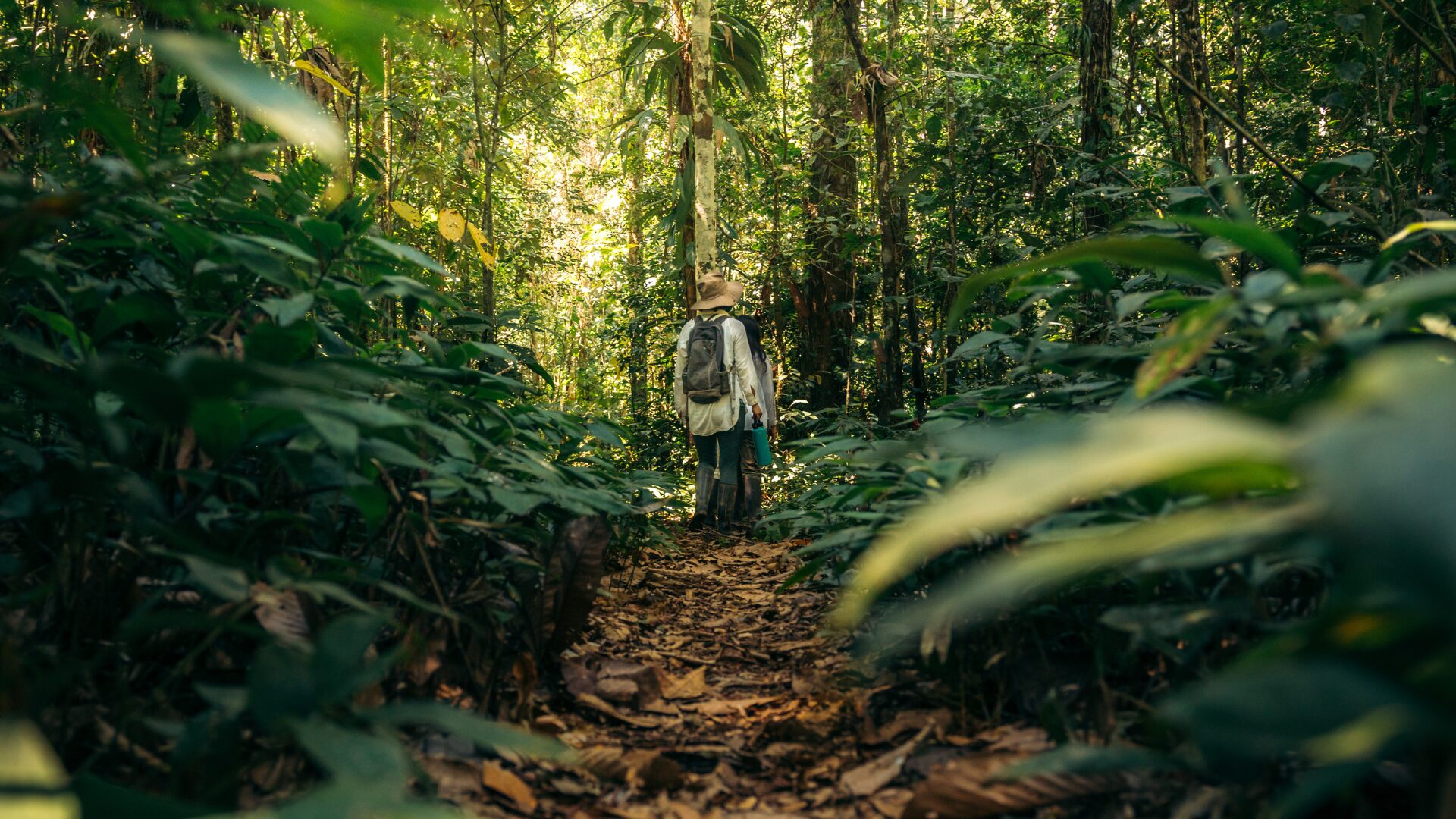
Guests exploring a trail during the afternoon. Photo by Carlos Gonzalez
The study was conducted in Tambopata, one of the most biologically diverse regions on the planet, where visitors are immersed in ecosystems that remain largely intact. At Rainforest Expeditions, guests regularly encounter insects and other arthropods during guided rainforest walks, canopy experiences, and night excursions, creating opportunities for direct interaction with forms of biodiversity that are often overlooked elsewhere.
Participants completed surveys before and after their rainforest experience, allowing researchers to evaluate changes in emotional responses such as fear, disgust, and avoidance behaviors toward different groups of arthropods.
The objective was not only to measure attitudes toward insects, but also to investigate whether immersive experiences in nature could help rebuild emotional connections with biodiversity.
The results were encouraging. Even after relatively short stays in the Amazon rainforest, many participants demonstrated measurable positive changes in how they perceived insects. Direct encounters with biodiversity appeared to reduce negative emotional reactions while increasing appreciation for arthropods and their ecological roles.
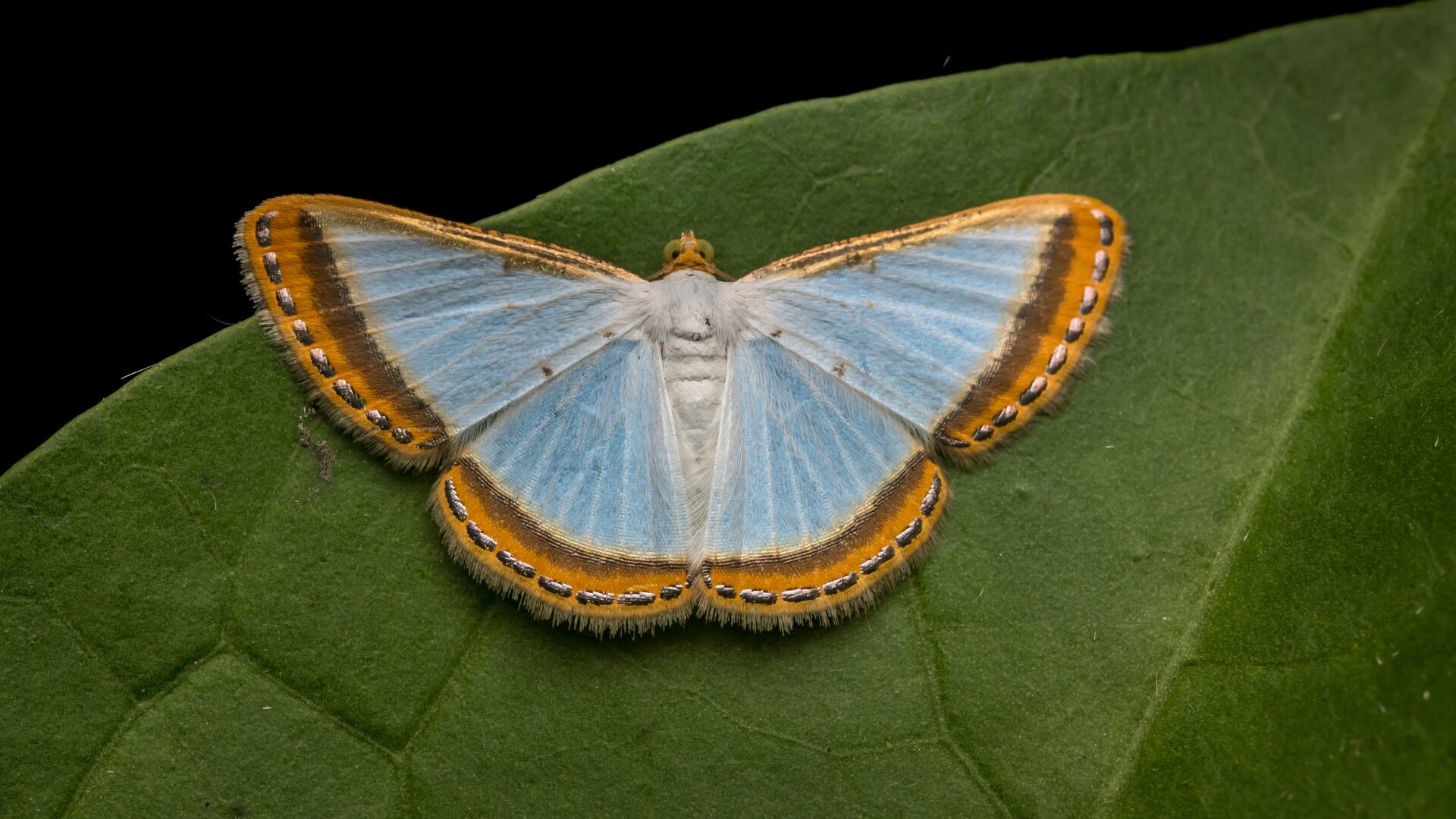
Leuciris fimbriaria on a leaf at Refugio Amazonas. Photo by Gabriel Serrano
The study also revealed that people do not respond equally to all insect groups. Butterflies, dragonflies, beetles, and cockroaches elicited markedly different emotional responses. These findings suggest that insects should not be treated as a single category when designing environmental education programs or conservation campaigns.
Experiencing insects within their natural environment helped participants recognize that most species pose little threat to humans. Instead, they began to view them as essential components of healthy ecosystems. These shifts in perception demonstrate that rainforest experiences can do more than inspire wonder. They can foster understanding, reduce stigma, and strengthen emotional connections with biodiversity.
For years, Rainforest Expeditions has supported scientific research in the Tambopata region, helping transform visitor experiences into opportunities for learning and conservation. Through Wired Amazon, researchers, naturalists, and conservation practitioners work together to generate knowledge that contributes to the protection of one of the world's most biodiverse landscapes.

Microlepidoptera mounting by Sebastian Fukunaga
This research aligns with a growing body of work demonstrating that conservation outcomes depend not only on ecological data but also on how people relate to nature. Understanding the emotional dimensions of biodiversity conservation is increasingly important in a world where direct contact with wildlife is becoming less common.
At the same time, the Amazon continues to reveal how much remains to be discovered. Through initiatives such as Discovering New Species, scientists working in Tambopata continue documenting species previously unknown to science, highlighting both the extraordinary diversity of the region and the importance of preserving these ecosystems before they can be fully understood.
Every encounter with an insect, spider, or other arthropod becomes part of a larger story: one of discovery, scientific understanding, and conservation.
For many visitors, a journey into the Amazon becomes more than a tourism experience. It offers an opportunity to reconnect with forms of life that are largely absent from urban environments. This reconnection may have important implications for conservation. Research suggests that people who develop positive experiences with nature are more likely to support environmental protection and engage in pro-conservation behaviors.
While scientific research remains essential for understanding insect declines, conservation also depends on cultural and psychological change. If insects are perceived primarily through fear or disgust, efforts to protect them may struggle to gain public support.
The Amazon rainforest, with its extraordinary biodiversity, offers a powerful setting for rebuilding these connections.
This study highlights the potential of ecotourism as a tool not only for environmental education, but also for strengthening the relationship between people and biodiversity. In highly biodiverse environments, direct experiences can transform perceptions surprisingly quickly. A few days spent observing insects within an intact rainforest ecosystem may be enough to replace fear with curiosity and indifference with appreciation.
As global urbanization continues and human interactions with nature become increasingly limited, opportunities to reconnect with biodiversity may become more important than ever.
Perhaps one of the most valuable lessons the rainforest can offer is that conservation begins with connection—and sometimes, that connection starts with the smallest creatures in the forest.
Through research shared by Wired Amazon, experiences facilitated by Rainforest Expeditions, and scientific initiatives such as Discovering New Species, the Amazon continues to demonstrate that every organism, no matter how small, plays a role in sustaining life on Earth.
