
Deep inside the Peruvian Amazon rainforest, an innovative project is changing the way we see wildlife. AmazonCam, developed by Wired Amazon at Rainforest Expeditions Ecolodges, uses camera traps in the Amazon rainforest to reveal the hidden lives of animals that rarely appear before humans. This initiative combines technology, research, and citizen science, inviting visitors to join the mission of protecting biodiversity through real scientific exploration.
Imagine a camera that waits patiently, day and night, for an animal to walk by. It doesn’t need a photographer — just movement. Equipped with motion sensors and infrared vision, these cameras turn on automatically when something passes in front of them. That means we get to see natural animal behavior, completely untouched by human presence.
Each photo or video becomes a small window into the rainforest’s secret life — a jaguar wandering under the moonlight, a peccary herd crossing a trail, or a curious paca sniffing the lens. And because these cameras can stay in the field for weeks, they give us a continuous, honest story of what happens when we’re not around.
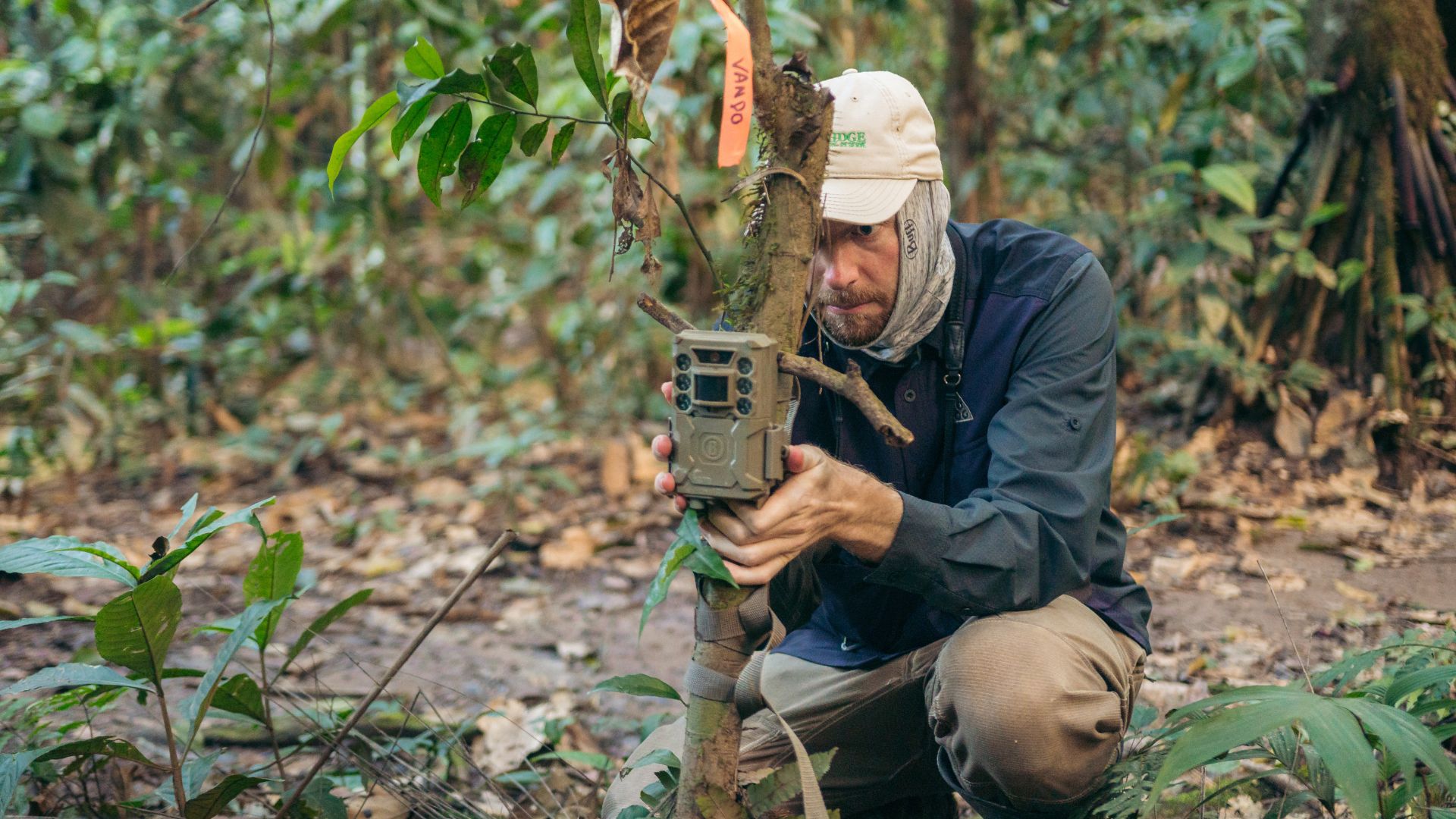
Guest installing a Camera Trap on a branch. Photo by Carlos Gonzalez
One of the most rewarding parts of AmazonCam is how it brings citizen science to life. Visitors at the Rainforest Expeditions Ecolodges don’t just observe nature — they take part in it.
During their stay, guests are invited to help our team install camera traps in the forest. With a bit of guidance, they walk the same trails we use for research, choosing the right spots where wildlife might appear.
Every camera installed by a traveler becomes part of our data network, helping us understand how animals move, feed, and coexist. It’s not only fun — it’s meaningful. You leave the lodge knowing that you’ve contributed something real to Amazon conservation.
Ver esta publicación en Instagram
Just last June, 37 groups of visitors joined us in the field, helping install new cameras and boosting our monitoring efforts. That enthusiasm reminds us that when science and tourism work together, conservation truly comes alive.
Over the past few weeks, our cameras have revealed an incredible variety of wildlife.
We’ve captured agoutis, brocket deer, collared peccaries, pacas, tapirs, tamanduas, and even felines like the ocelot and jaguar two of the rainforest’s most elusive felines.
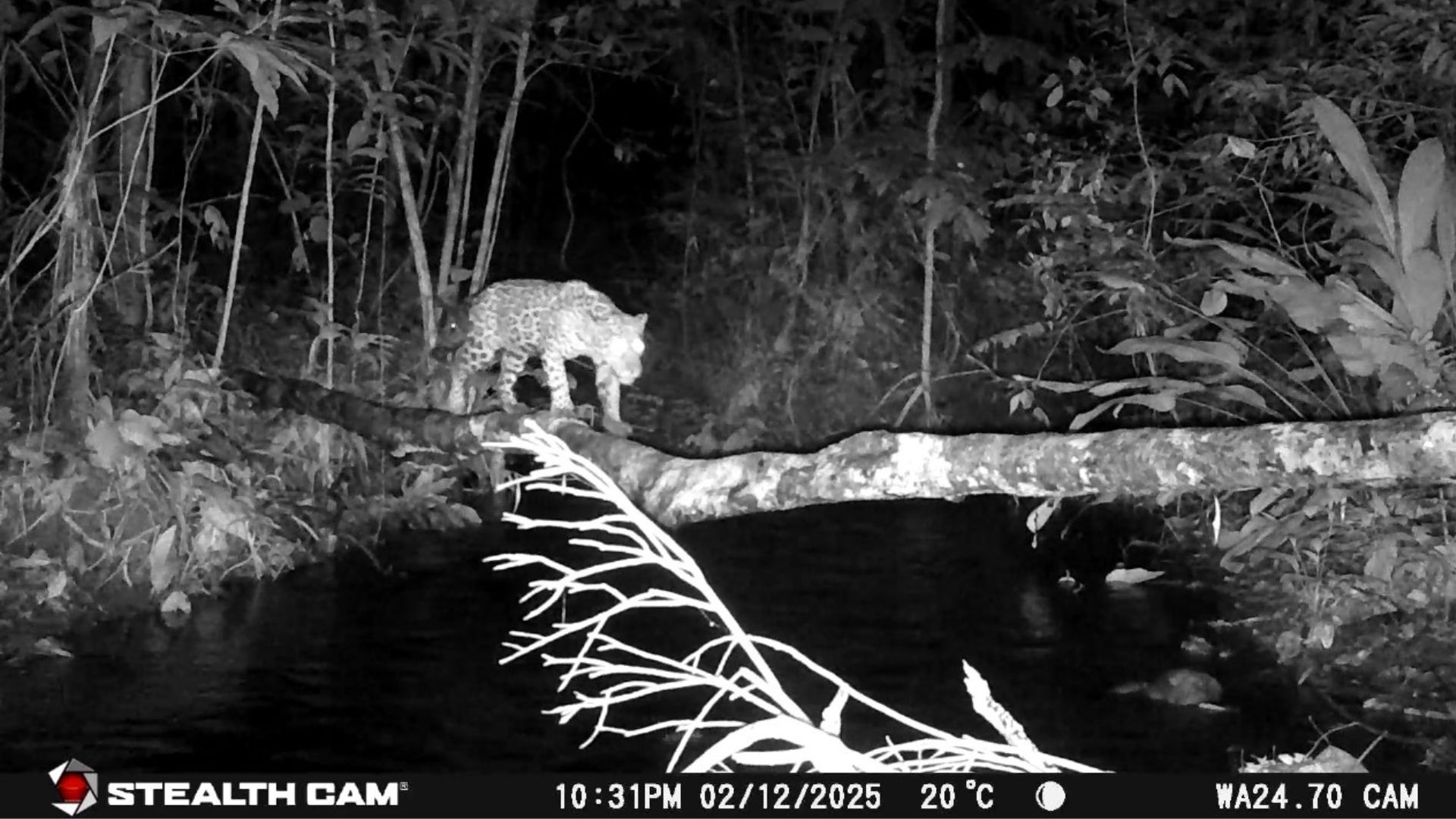
Jaguar crossing over a creek
Each sighting tells a story. For example, both the ocelot and puma have been recorded using the same trails near the Canopy Tower and Mammal Clay Lick — the very paths our guests walk on. It seems they prefer these open routes, probably because they make travel easier.
Even more interesting, the ocelot tends to appear at different times, possibly avoiding direct contact with its larger cousin. This type of behavior teaches us a lot about how species share the same space without conflict — a delicate dance of coexistence that keeps the ecosystem in balance
At its heart, AmazonCam is more than just a research project. It’s a bridge — connecting technology, tourism, and science to protect the Amazon’s incredible biodiversity.
Every photo we collect is a piece of a bigger puzzle: one that helps us understand how species interact, move, and survive in this complex environment. And every visitor who joins us becomes part of that story — a witness, an explorer, and ultimately, a guardian of the rainforest.
Because in the end, conservation begins with connection. And here in Tambopata, that connection starts with a simple click — one camera trap at a time.
