For decades, these majestic birds have been an icon of the Peruvian Amazon. Their vibrant colors paint the skies of tropical forests, and their calls bring them to life. However, the towering trees that once offered perfect nesting cavities have been disappearing, affected by deforestation, illegal logging, and unplanned urbanization. Without safe nests, the future of macaws is uncertain. For this reason, for the past 35 years, the Tambopata Macaw Project and Rainforest Expeditions have transformed science and passion into action.
When the project began, the dream of Eduardo Nycander, founder of Rainforest Expeditions, was to save the macaws. The idea of using artificial nests emerged, but in the beginning, the prototypes were far from perfect. Some were too small, and in others, the materials couldn’t withstand the intense Amazon climate. Yet, just like the macaws, the team never gave up. Every mistake was a lesson, and each attempt brought them closer to a design that truly imitated nature.
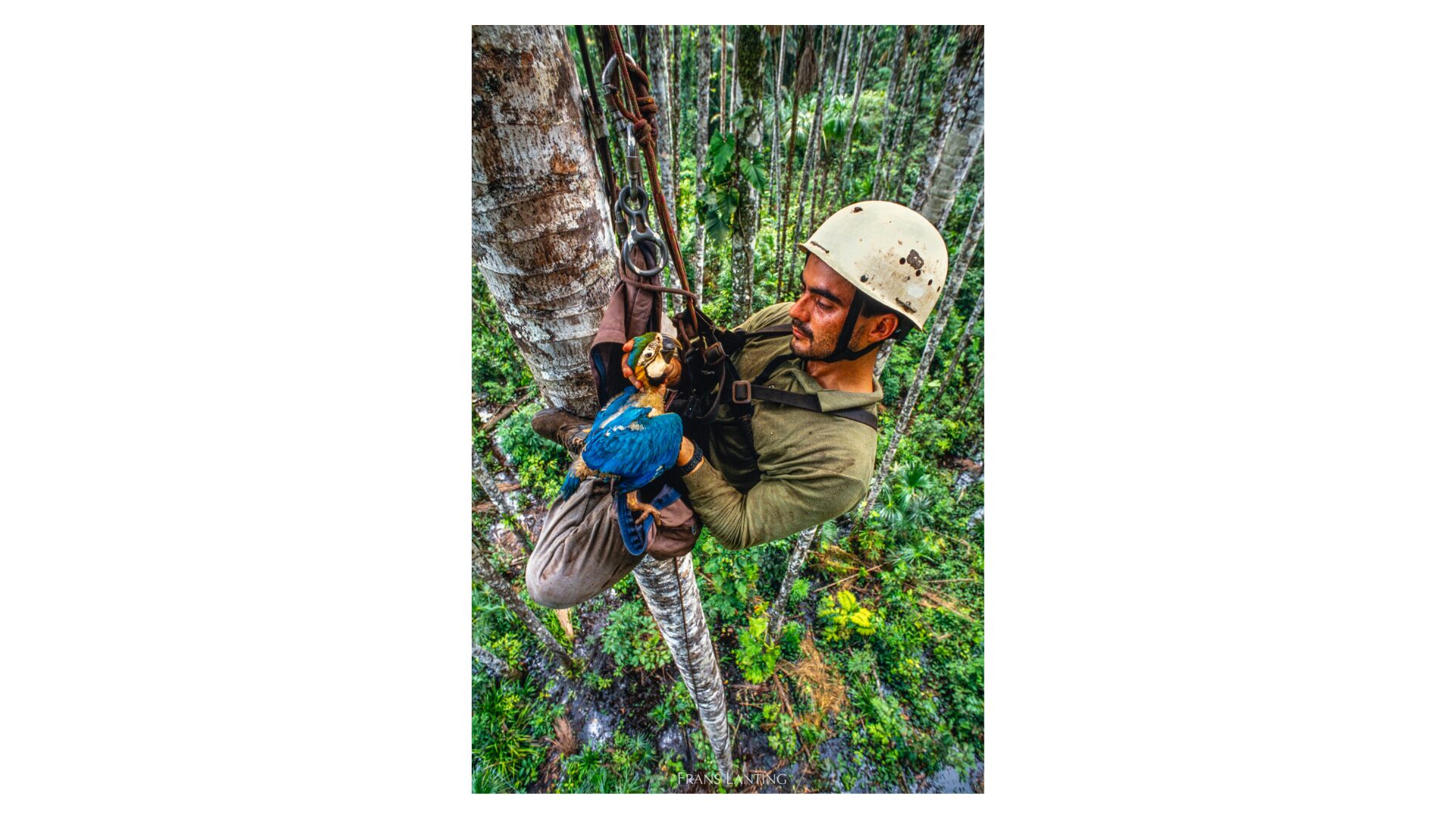
Eduardo Nycander with a Blue and Yellow Macaw (Ara Ararauna). Photo by Frans Lanting
Year after year, the nests improved, supported by scientific research and, above all, trial and error. Eventually, a strong model made of PVC was developed, capable of lasting up to 40 years with proper maintenance. This durability allows the nests to be hung in strategic points of the forest, helping different macaw species to nest successfully.
In collaboration with the investigation of the Professors Letty Salinas and Cesar Arana of the National University of San Marcos, technology has been applied to this new nest design, incorporating cameras inside and outside the structures. This innovation allows researchers to observe the chicks in greater detail.
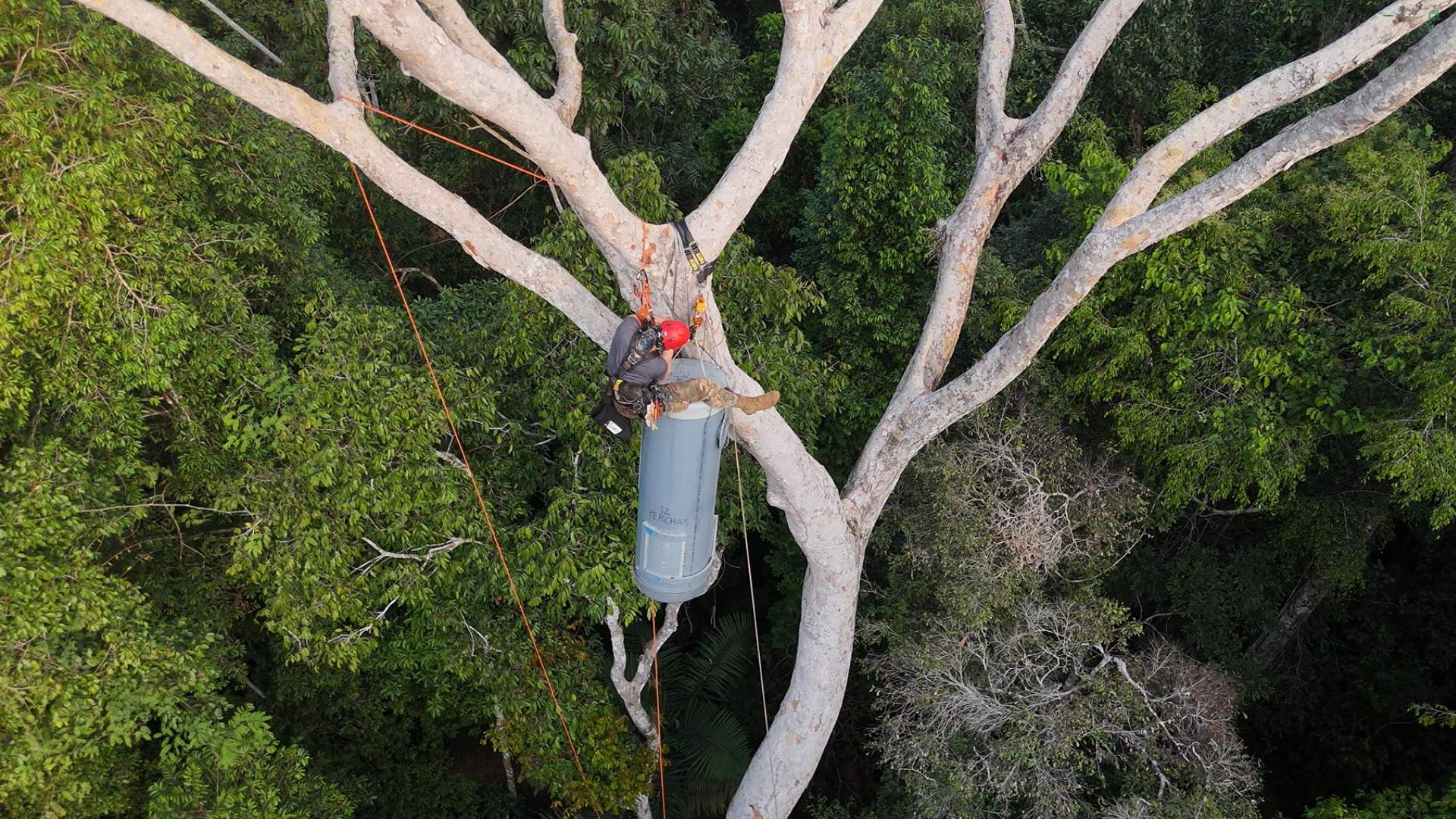
Installation of a new artificial nest in Refugio Amazonas. Photo made with a DJI drone
Today, thanks to the Gordon & Betty Moore Foundation, we have begun installing nests outside the Tambopata National Reserve. This is more than just an expansion—it is a symbol of what ecotourism and conservation can achieve together. Travelers visiting our ecolodges will witness the meticulous work of researchers and, with a bit of luck, the joy of seeing young macaws lay their first eggs, hatch their first chicks, and take their first flights.
For Rainforest Expeditions, this is the beginning of a greater vision: to take the success of artificial nests beyond the Protected Natural Area, creating safe spaces for macaws in regions more affected by destructive activities. None of this would be possible without the collaboration of organizations such as SERNANP, AIDER, and our conservation partners: the Native Community of Infierno, Palma Real, Sonene, Camino Verde, Hacienda Herrera, Kawsay, Wilderness International, Fauna Forever, Inotawa, Espíritu del Monte, Amazon Paradise, Ibaa House Tambopata, K’renda Homet, and Sachavacayoc Center, all of whom are betting on science for conservation through our innovative Wired Amazon program.
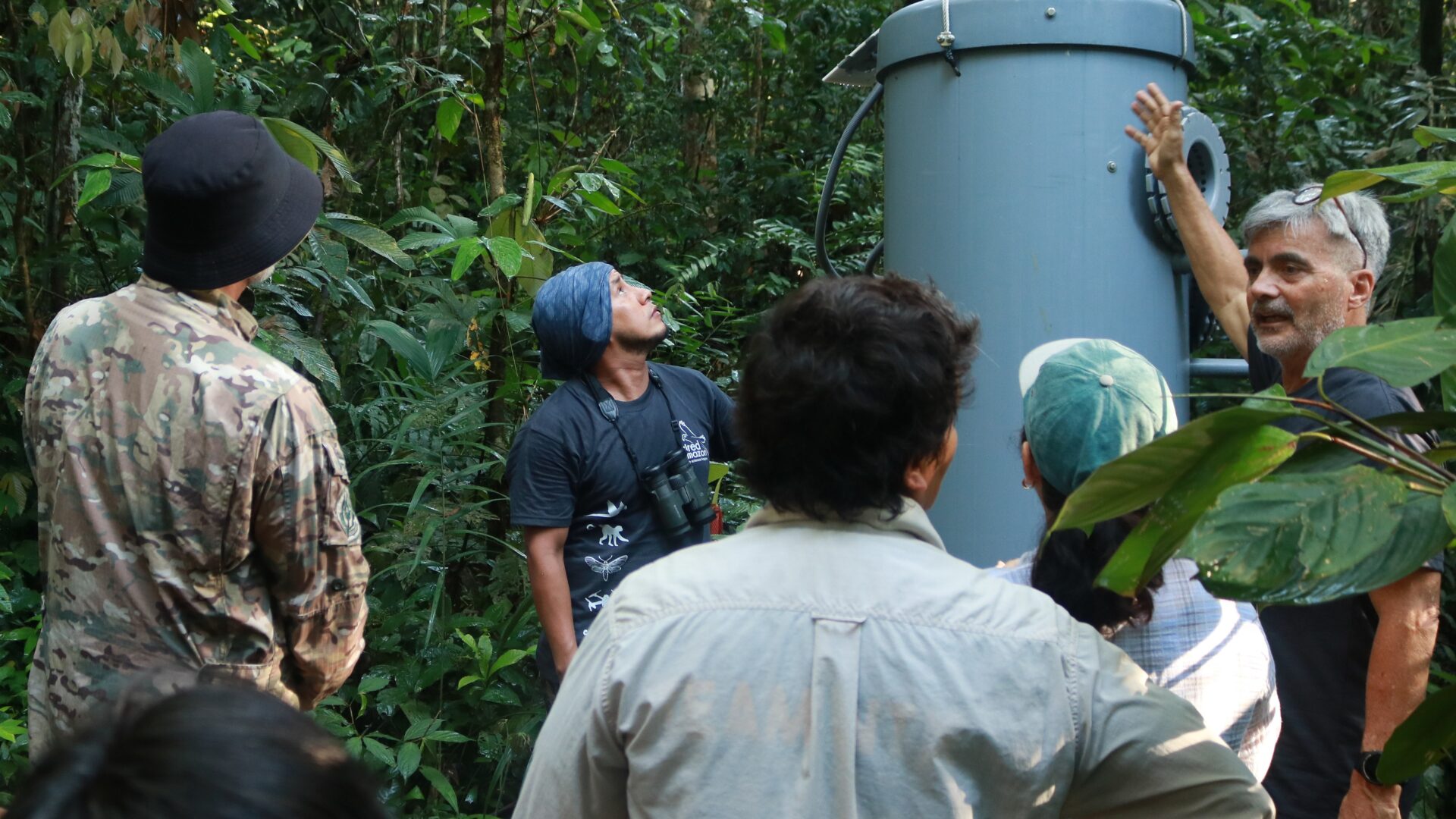
Eduardo Nycander is showing one artificial nest to our conservation allies. Photo by Sebastián Fukunaga.
Every nest lifted into the forest canopy carries a story of resilience, teamwork, and hope. It is proof that a dream with a purpose for conservation can inspire and be shared with many more people.